Trader Max
$NVDA breakout incoming — earnings setup looks like a runner.
14
62
388
11K
We grade every tracked account against real price action. Follower count barely moves with accuracy. And the biggest accounts are the least accurate band.
Across 137 ranked accounts, the correlation between follower count and accuracy is −0.21. Audience size is not skill.
Accounts under 25k followers that sit in our top 25 by score: accuracy plus how much their winners actually moved.
Four reproducible steps. We grade the call against the tape, not the person.
An LLM reads every public post and pulls the ticker, the direction (buy or sell) and the timestamp. Jokes and commentary are filtered out.
Each call is checked against actual market price over fixed windows, from 24 hours to a year. Every window has its own bar to clear before it counts as a win.
Win rate is wins ÷ resolved calls, straight from the price data, including the calls a trader later deletes. We keep the receipt.
The leaderboard blends how often they're right with how much the winners moved, so a lucky one-off can't outrank a long, consistent record.
Click any call and you see the original post and the exact price it settled against. Nothing is hand-picked.
We ingest every X (Twitter), Reddit, and StockTwits trader, then score their calls with Claude, OpenAI, and Gemini. The receipts you see below all start here.

Every person ranked by algorithm using accuracy and return.

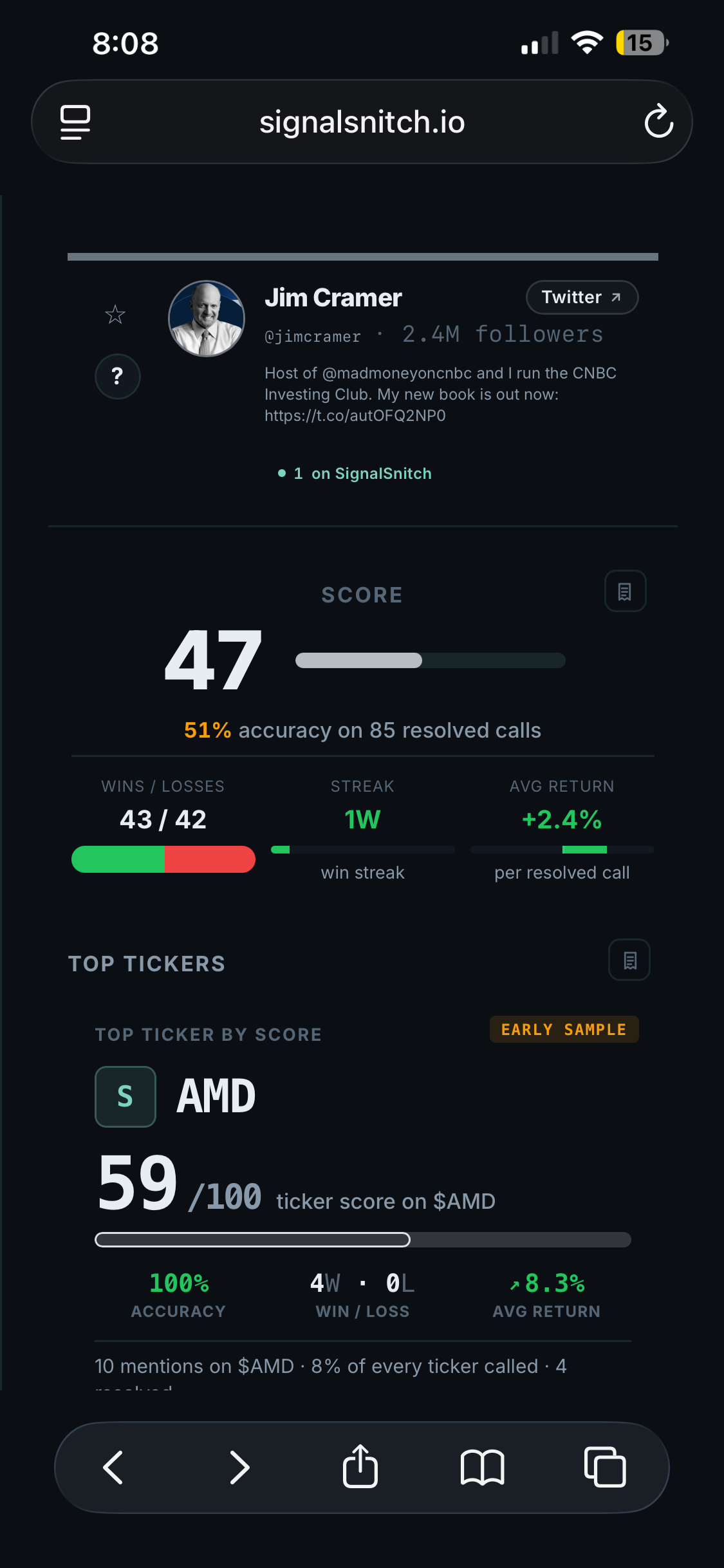
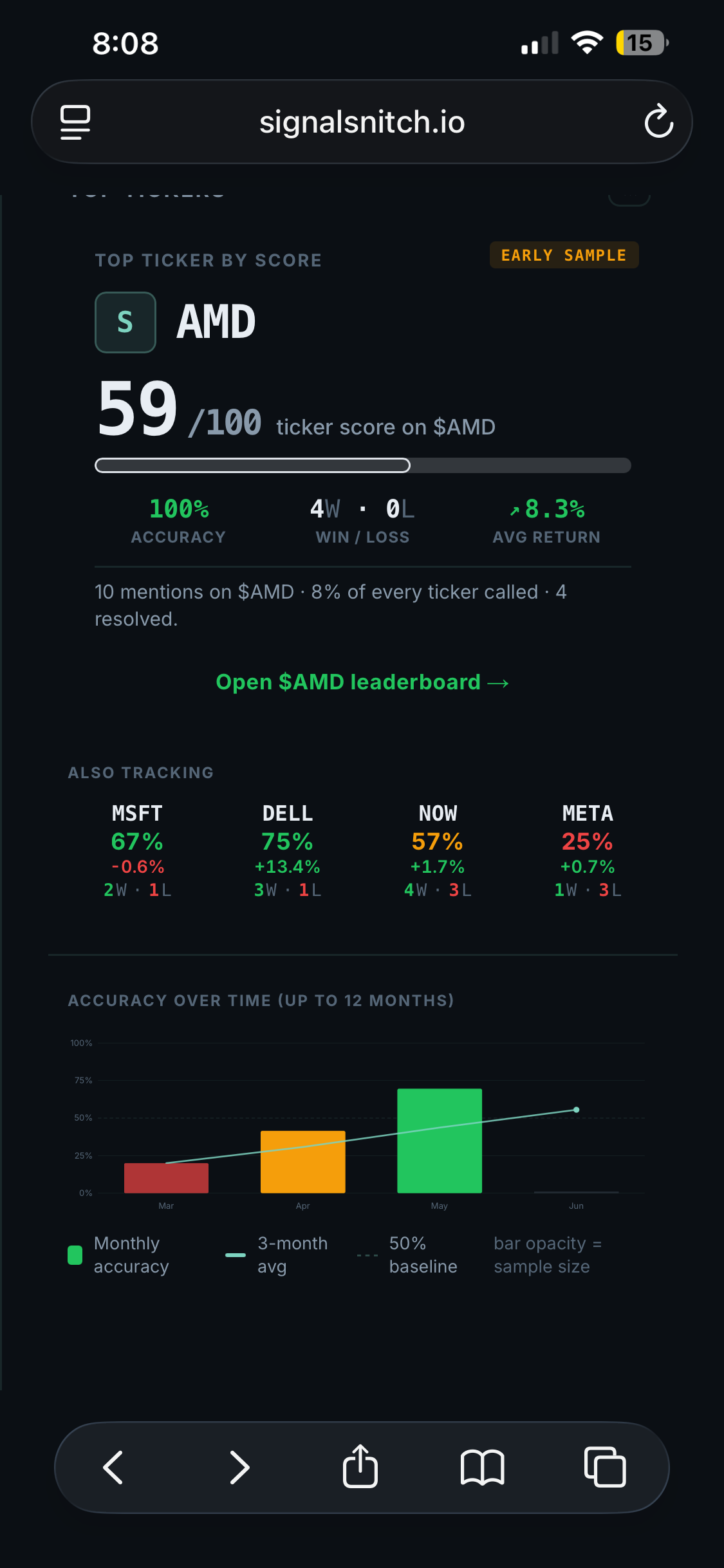
The Snitchboard is one live feed of where the proven callers are piling in. We score every trader on their real track record, so when the accurate ones converge on a ticker, you see the crowd form before it moves.


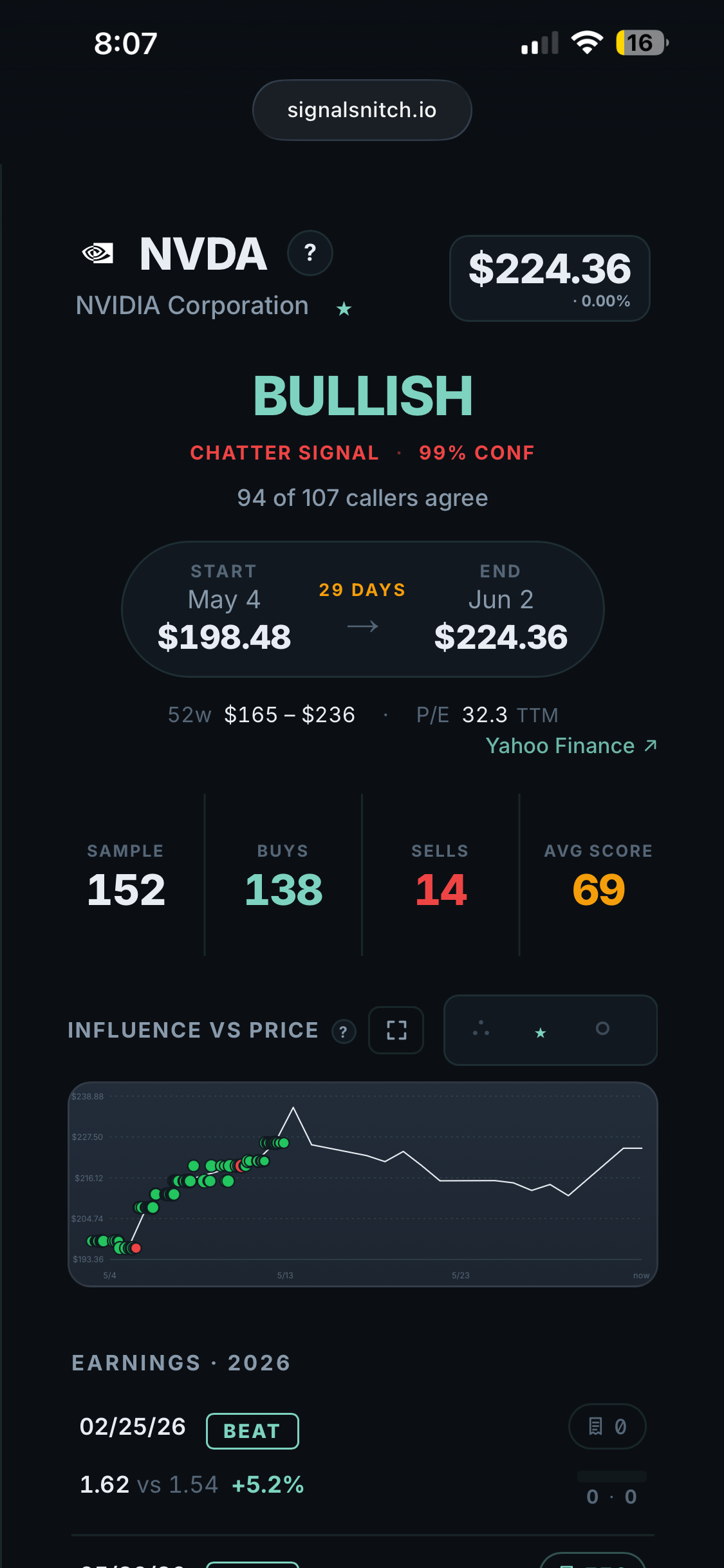
Ticker Pulse ranks every stock by how many trackers are calling it, and tells you who's been right on this name. Type any ticker, see the verdict.

Same data, short-term cut: profit by return %. Long-only, marked-to-market, real money equivalent.

Your watchlist and the traders you follow, on one board — who's buying, who's selling, what moved overnight, and the volume behind it. Read it in ten seconds, before the open.
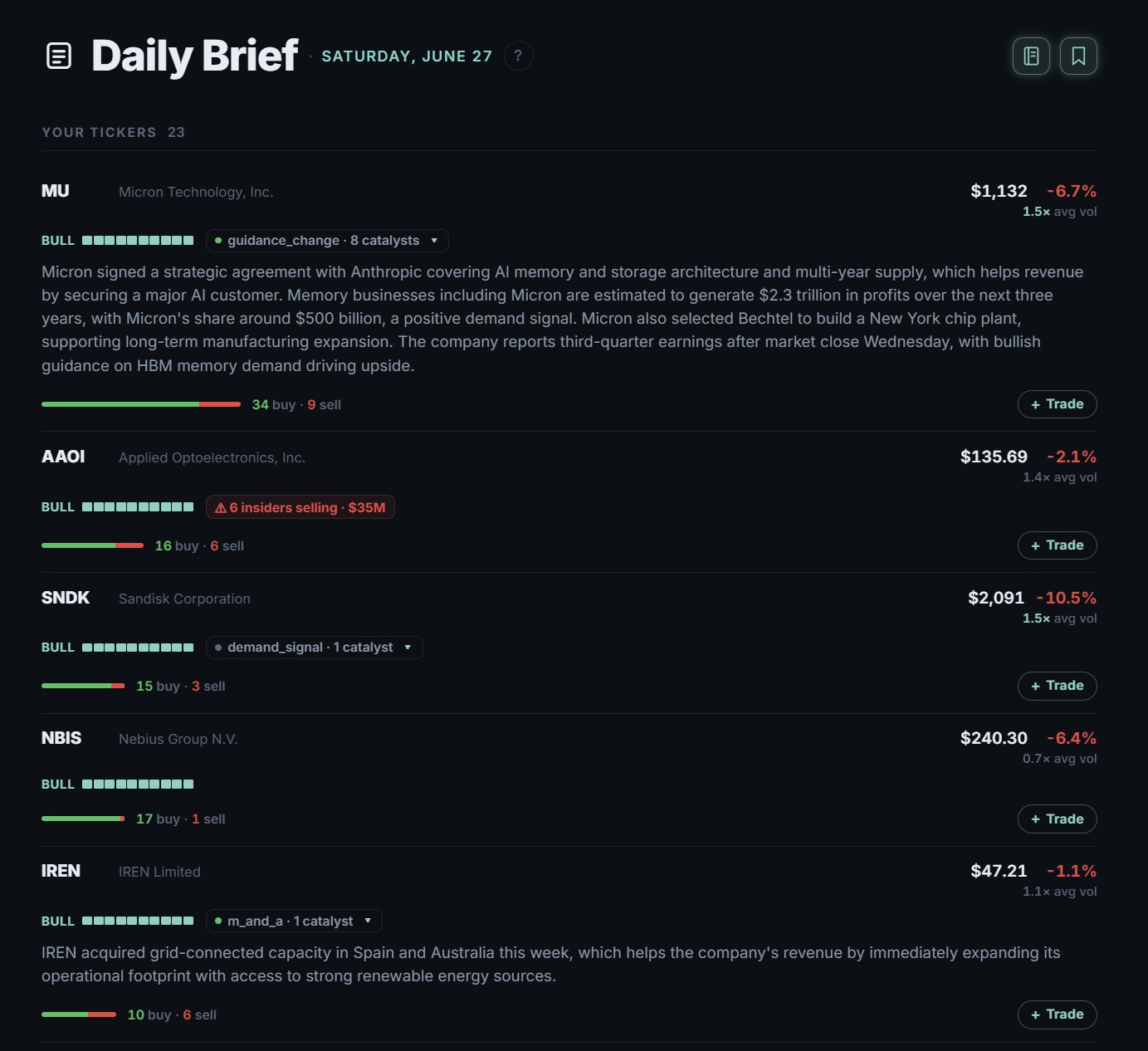
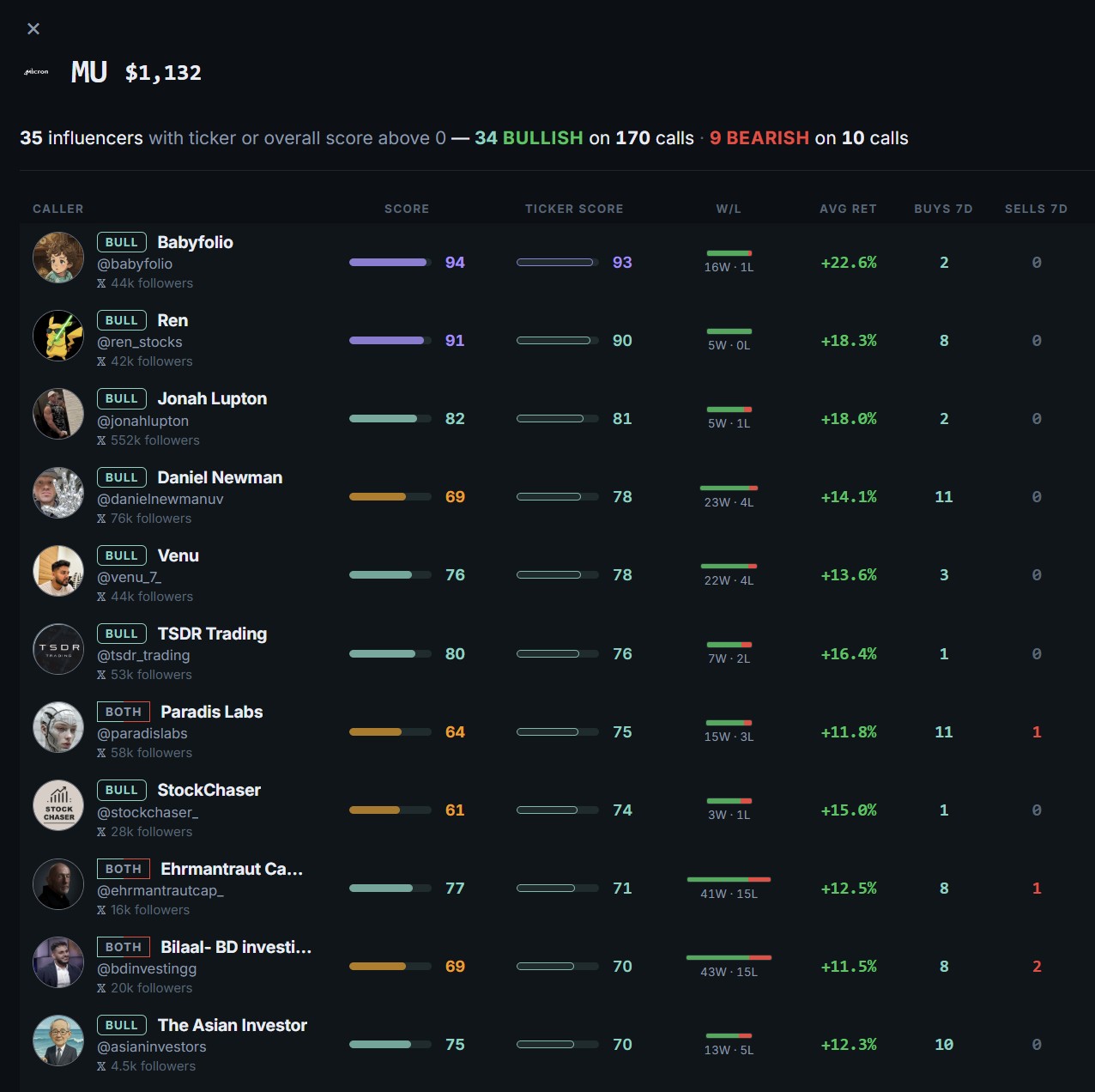
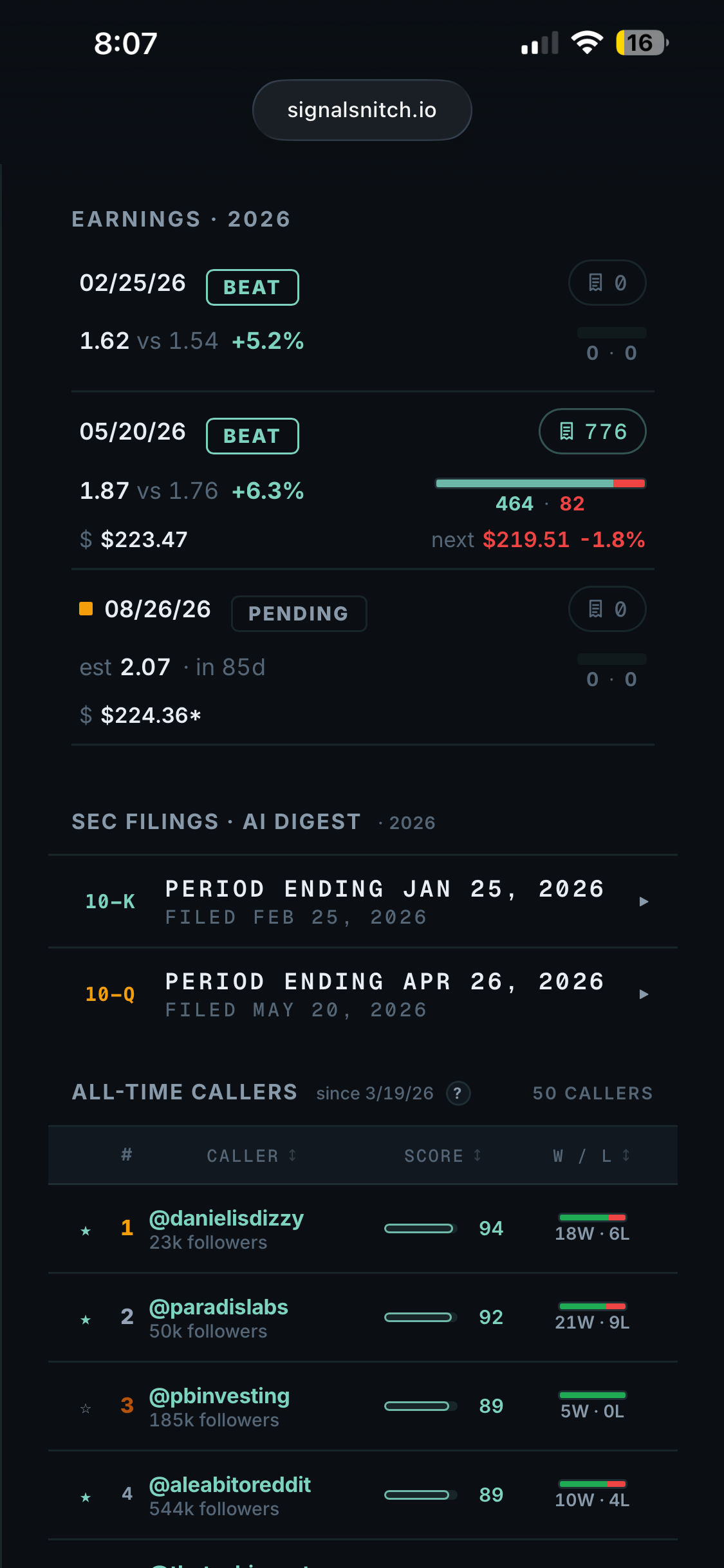
Every ticker arrives fully worked up: the catalysts driving it, insiders buying and selling straight from SEC filings, the earnings and analyst flips, and a plain-English read on the latest 10-K. The homework, already done.
Product launches, contract wins, guidance, M&A, litigation — mined from filings, company news, and the traders themselves, rolled up per ticker, per day.
SEC Form 4 buys and sells, with planned 10b5-1 sales separated from the discretionary ones that actually mean something.
The earnings calendar with beat/miss receipts, consensus counts, and the upgrade/downgrade flips with price targets — so a "beat" has context.
The latest 10-K / 10-Q distilled to what actually changed — not a 200-page PDF.
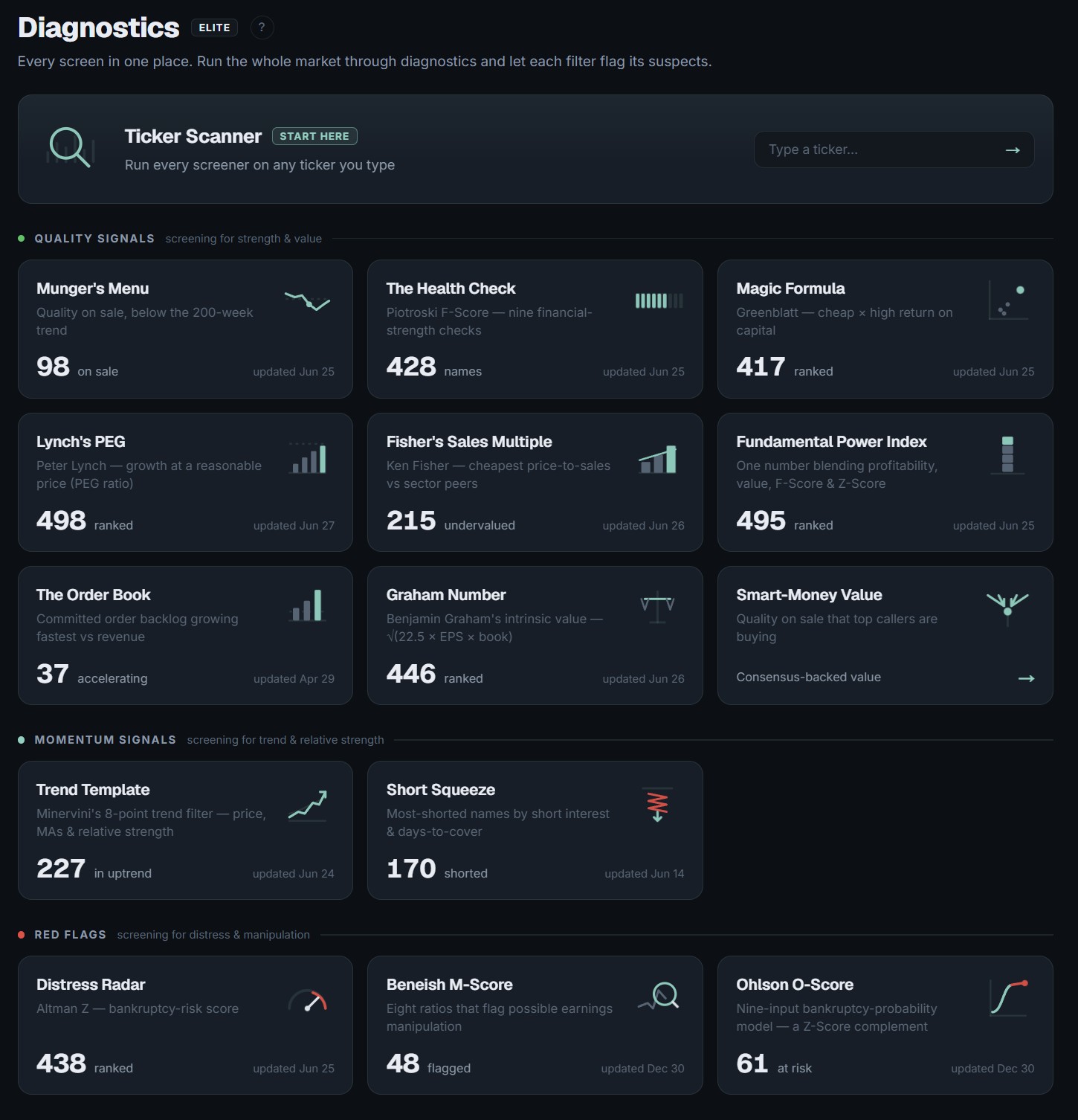
Fourteen of the most respected screens in investing — Munger, Piotroski, Altman-Z, Beneish, Graham, Lynch, Minervini — recomputed across the market every day. The homework a desk pays an analyst to grind out.
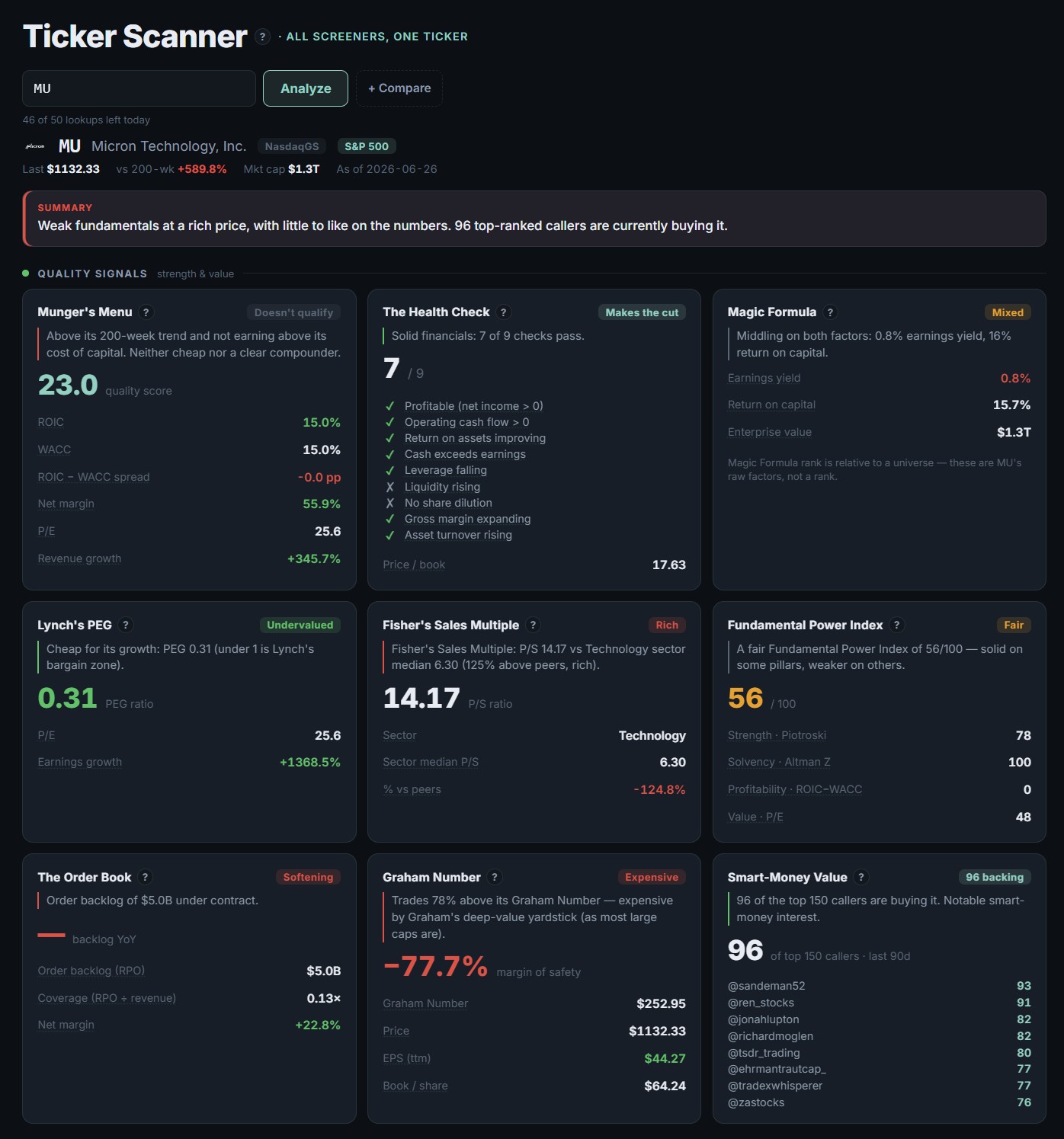
The same chart shows the trader's call as a marker on top of the actual price action. You can see at a glance whether the call landed or got run over by the next day's move.
Every post is archived the moment we see it. If a trader deletes a bad call after the fact, we still have the screenshot, the price snapshot, and the W/L verdict. Lifetime + per-ticker accuracy are volume-weighted so a 1-of-1 fluke doesn't sit next to a 200-of-300 record.
The real-time Tip Line fires an email and web push alert the moment a high-accuracy caller posts on a ticker you follow, so you act while the call is fresh, not after the move.
Every tier sees the same un-spun accuracy data. Paid adds more reach, real-time alerts, and deeper history. At Elite, a full research desk.